
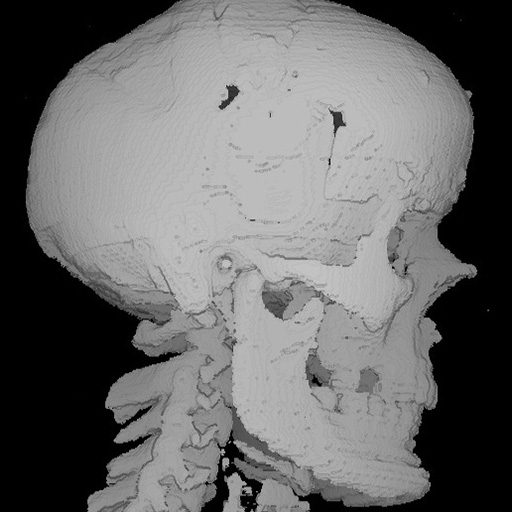
 VOXEL-MAN is a pioneer in medical visualization and simulation. The VOXEL-MAN project at the University Medical Center Hamburg-Eppendorf (UKE) started at around 1984, when a research group led by Professor Karl Heinz Höhne made its first experiments on the 3D visualization of bone from computed tomography (CT) images. Data structures, projection and shading methods were soon improved, and the first clinical applications were implemented in craniofacial surgery and orthopedics.
In magnetic resonance imaging (MRI), segmentation of anatomical structures—that is, their identification and labeling—posed a major challenge. The first in-vivo images of a human brain from MRI could be presented at the 1987 RSNA. The following RSNA saw another first, this time a 3D beating heart (4D heart) from ECG-triggered MRI. The VOXEL-MAN 3D visualization system was later implemented on a Siemens Magnetom 63 SP MRI scanner.
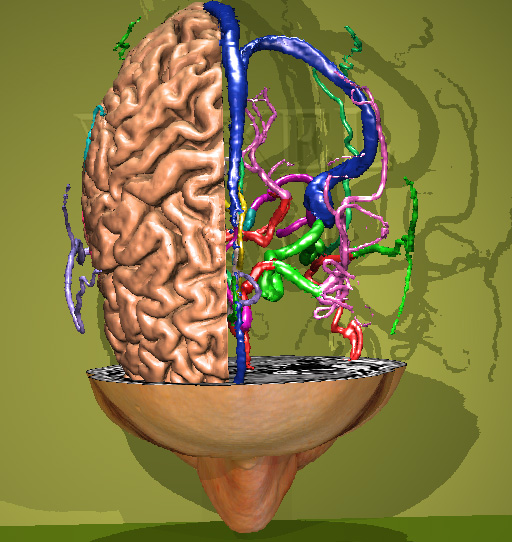 In the early 1990s, a general (although not automatic) solution to the segmentation problem could be found with the interactive segmentation paradigm. While certain clinical applications such as 3D radiotherapy planning proved successful, the general focus shifted to 3D anatomical atlases. VOXEL-MAN did groundbreaking work in the development of a new kind of virtual body model that integrates spatial and descriptive knowledge of human anatomy, function, and radiological appearance, and makes it available for interactive exploration. The first 3D anatomical atlas VOXEL-MAN Brain and Skull was released in 1995 (published by Springer-Verlag). The concept also generated significant interest outside the medical domain, for example in Egyptology, anthropology, and veterinary medicine.
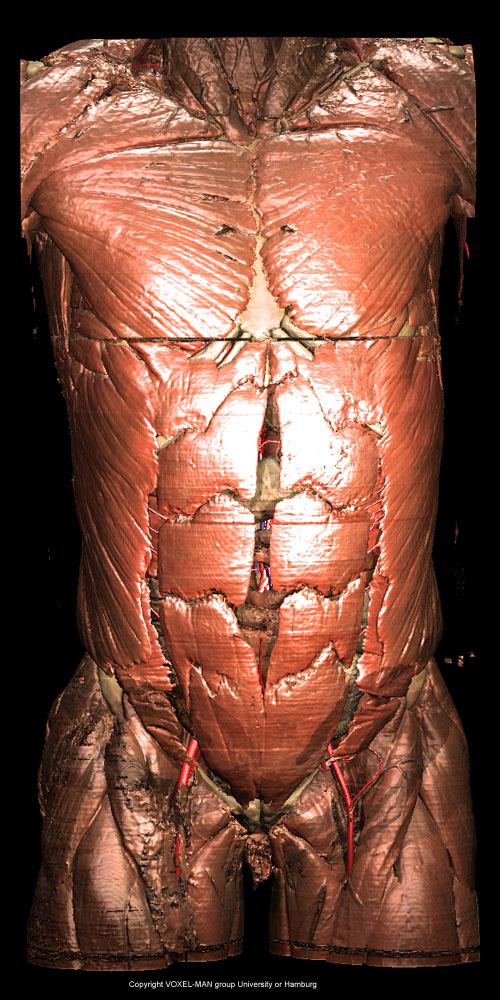 The availability of the NLM Visible Human Project datasets provided a perfect complement for our 3D atlas technology. The segmentation and visualization methods had to be extended to handle full color 3D models, leading to anatomical images of unprecedented realism and detail. However, the workstation computers needed for such large models were still much too expensive for widespread use. As a solution, a new paradigm was developed which is based on pre-calculated scenes. These works led to the anatomical atlases VOXEL-MAN 3D Navigator: Brain and Skull, Inner Organs and Upper Limb (all published by Springer-Verlag) and EUS meets VOXEL-MAN, a training system for endoscopic ultrasound (published by Hitachi Medical Systems).
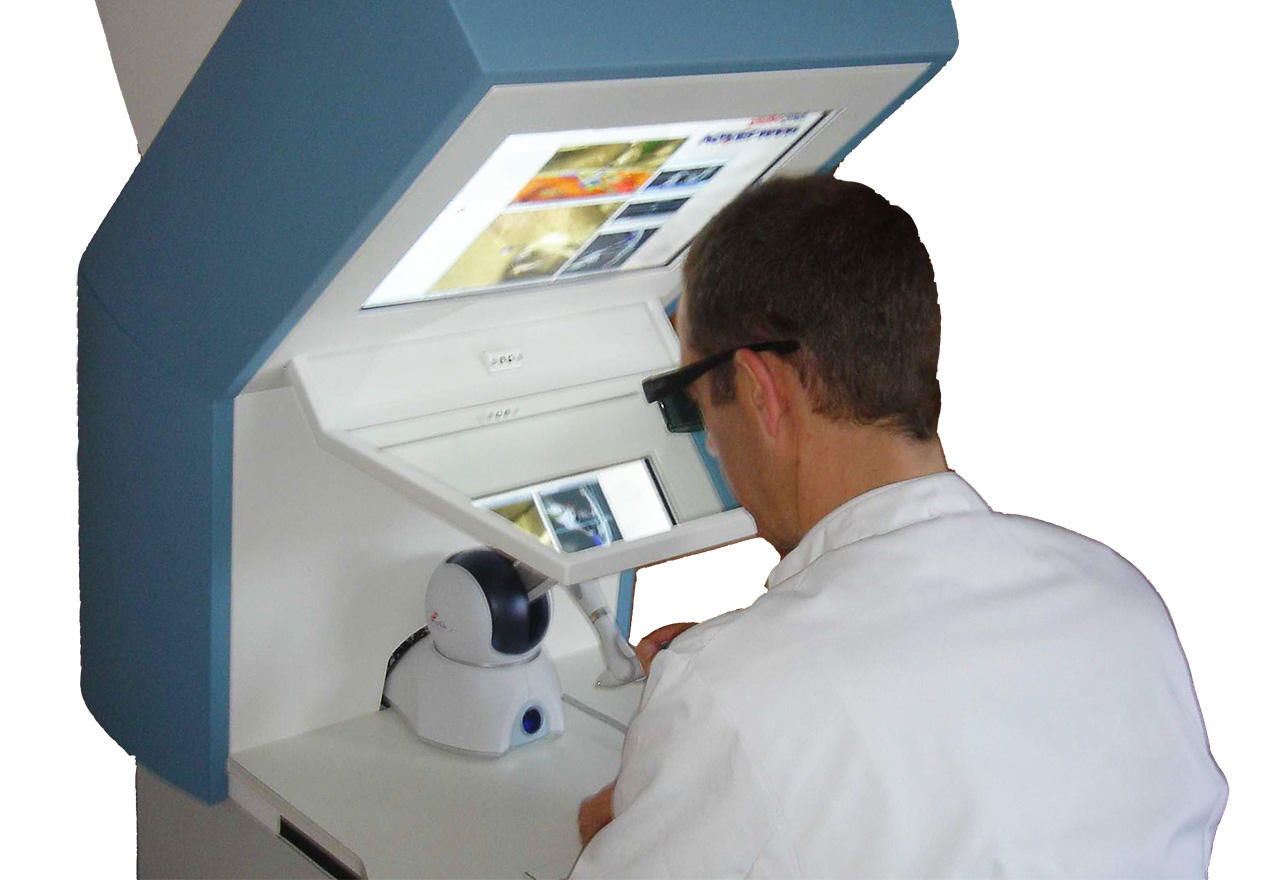 Around 2000, experiments with the newly available haptic devices showed their potential for medical applications. In close cooperation with clinical partners, a first prototype of a virtual ear surgery simulator for temporal bone dissection was developed, which combines unsurpassed visual realism and haptic feedback. In 2005, the dean of the medical school established the VOXEL-MAN Group, and the VOXEL-MAN TempoSurg training simulator was launched.
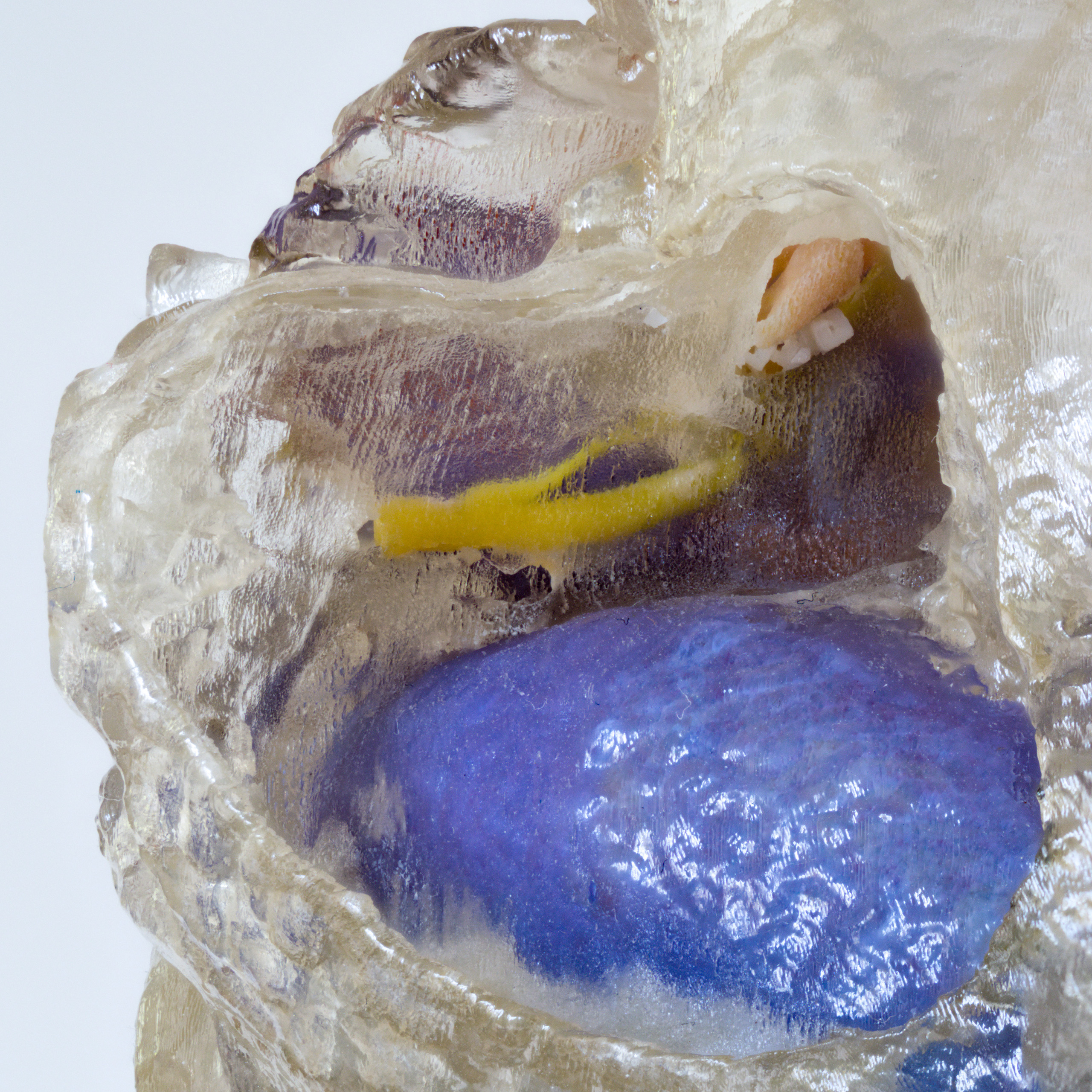
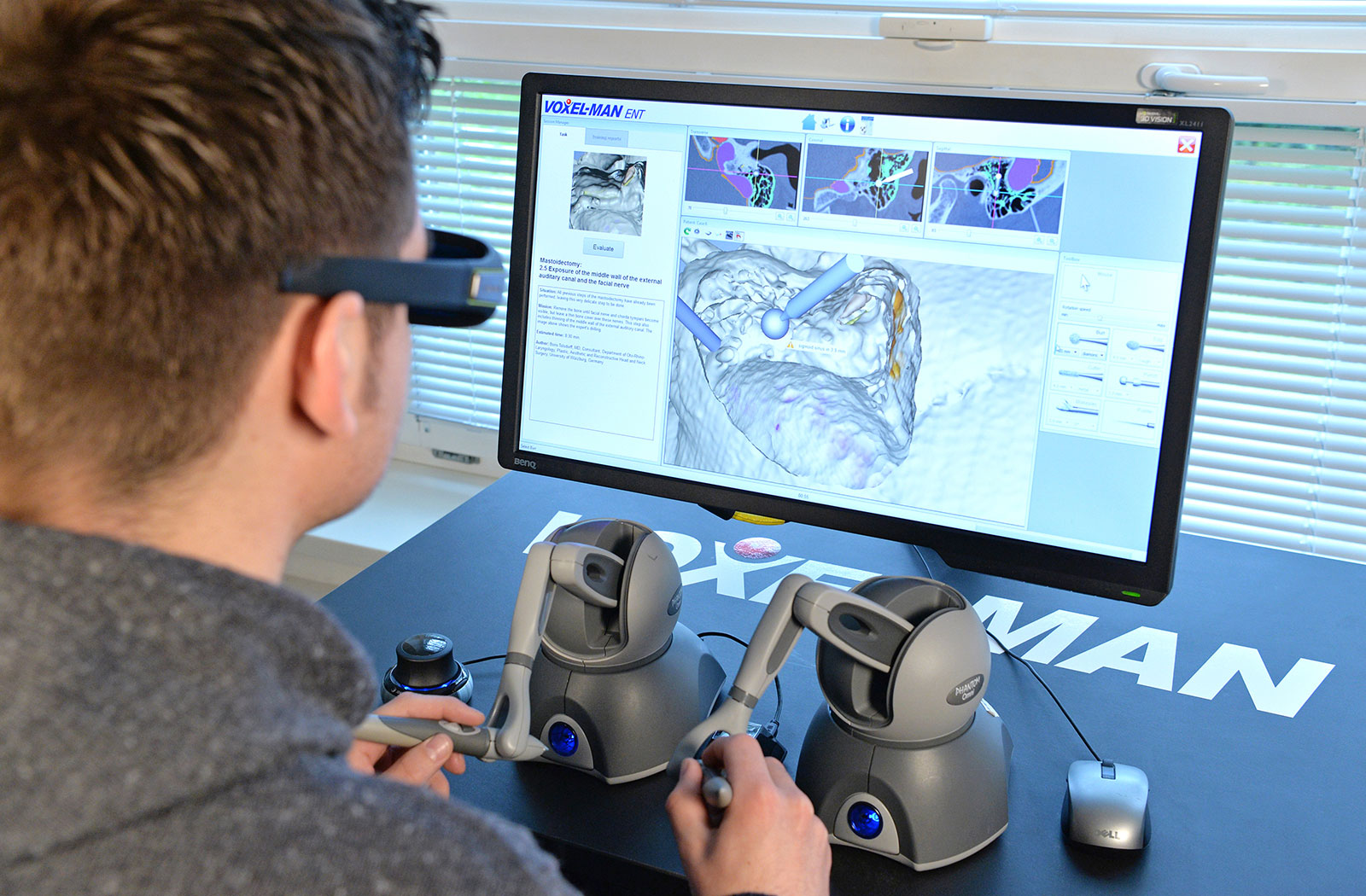 In 2009, the VOXEL-MAN Group could raise an EXIST grant for the development of a dental simulator. It was used to create a state-of-the-art software architecture that serves as the platform for all VOXEL-MAN training simulators. In 2011, the second generation of the temporal bone drilling simulator called VOXEL-MAN Tempo and the tooth preparation simulator VOXEL-MAN Dental were presented, later followed by VOXEL-MAN Sinus for endoscopic sinus surgery. VOXEL-MAN My Cases for importing clinical cases and VOXEL-MAN 3D Printing for creating intra-operative 3D models provide an interface to the real world. The latest addition is VOXEL-MAN Sonography for training of abdominal and endoscopic ultrasound (EUS).
 Today, VOXEL-MAN surgical simulators are used by leading universities and hospitals around the world, from Honululu in the west to Kyoto in the east, and from Trondheim in the north to Porto Alegre in the south. The high level of interest in our simulators is also reflected in a growing number of independent validation studies.
The VOXEL-MAN simulator business was sold in 2025. However, a large portion of our work including apps and datasets remains publicly available. Today, the VOXEL-MAN project exists as a loose association of former team members.
About our names
A voxel (short for volume element) is the elementary component of a digital representation of a three-dimensional object. The name VOXEL-MAN was already used for our very first 3D visualization systems, possibly inspired by some popular gadgets back in the day.
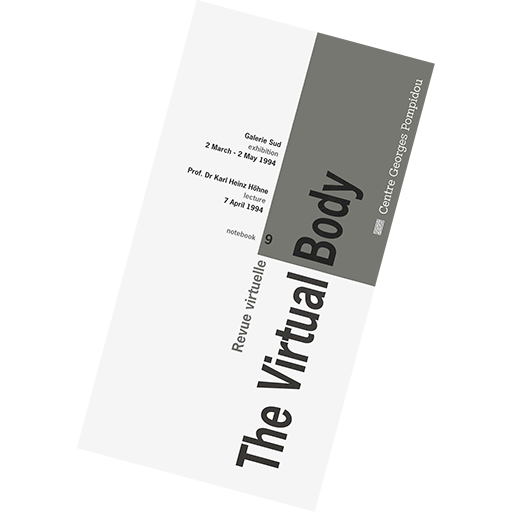 The term virtual body was coined around 1994, when it was used for the exhibition The Virtual Body at the Centre Pompidou in Paris, as well as for the movie Professor Röntgen meets the Virtual Body. It denotes a self-explanatory computer-based model of a living body that can be examined and treated in a similar manner.